Are social enterprises a more sustainable, ethical and dignified way to make the world a better place than charity?
Nsimre Aston admits it’s been a frustrating morning.
“Our office is empty!” he says. “A customer has just bought all our stock. 50 bags, and he actually wanted 150! The demand is so big we can hardly keep up.”
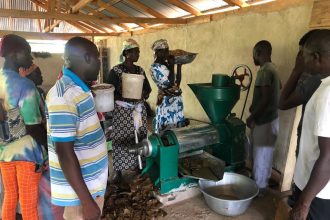
His company, Prolific Innovations Limited, based in Uganda, supplies recycled fertiliser. With his team he collects organic waste from local markets and, after sorting and removing unwanted rubbish, the organic material is put into containers with thousands of Black Soldier Fly larvae which, within days, convert the waste into high-grade organic fertiliser.
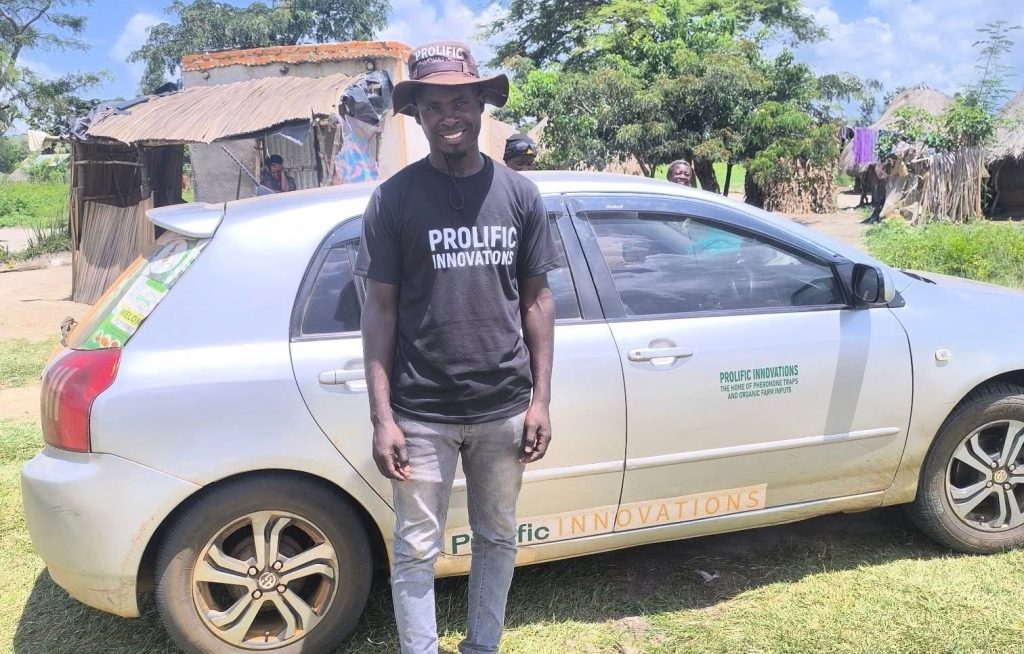
From small beginnings Aston’s enterprise now supplies 2,500 agri-dealers and 3,000 famers with over 6,000 tonnes of eco-friendly organic fertiliser per year. And it’s growing rapidly.
A few years ago, however, it was a very different story.
“We had skills, but no jobs,” he recalls. “I had been volunteering with an NGO that was working with farmers and there was a company selling black soldier fly eggs and I spotted a big opportunity.”
The farmers had to use the eggs and larvae to make fertiliser themselves, but Aston thought he could do the work for them and supply the fertiliser direct, so the farmers could concentrate on raising crops.
With three friends the new company raised cash from personal savings to buy eggs and equipment and started production in 2023.
“In the first year we had no profits and we ran out of money,” says Aston. “I was broke. And then Alan Braithwaite sent me some money to buy supplies, and we were back in business. If it wasn’t for him. I wouldn’t be here.”
UK-based Braithwaite, a former logistics consultant, sold his business a few years ago and since then has been involved in social impact advocacy and is an active investor in purpose-led enterprises. He first met Aston while working with The Social Impact Files on a documentary in Uganda.
“We came across him when we visited an NGO in Kampala and he organised cars and a guide to take us to a refugee camp in the north,” Braithwaite recalls. “Aston has got something about him, you know, he’ll push the envelope the whole time. So when he set himself up just with a bicycle and selling this stuff, well, I thought it was wonderful so later I bunged him a couple of grand when he needed it and he soon paid me back. When he started, he was just on a bike with panniers selling stuff locally, now he has 6 employees in Kampala and agents and marketing people all over Uganda and I think a couple of pickup trucks, which I think is nothing short of awesome.”
Aston is also a strong believer in ecological farming and care for the environment. “We see a lot of farmers using products that are toxic,” says Aston. “So, we offer training in organic farming methods and the use of organic products.”
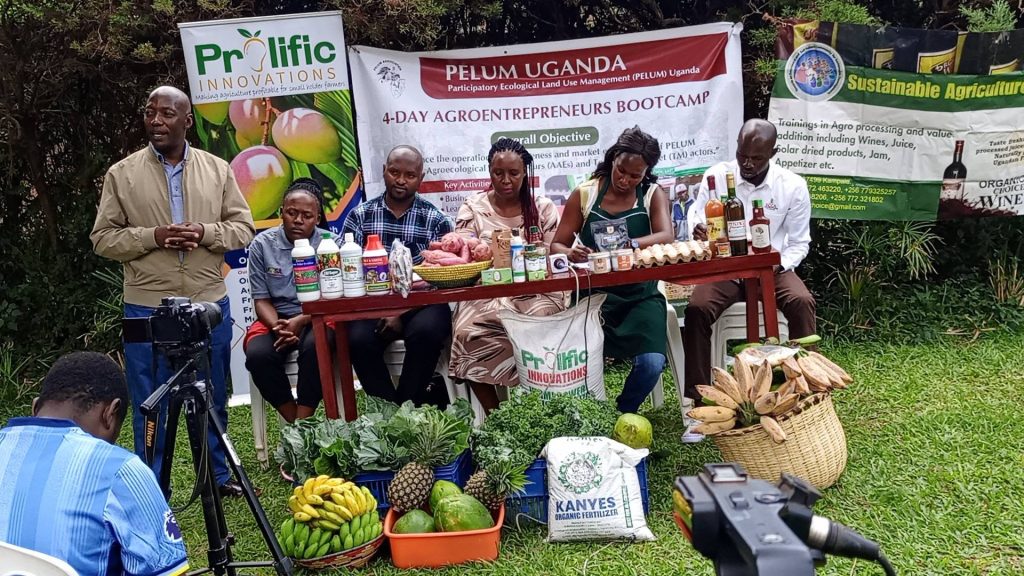
Aston is typical of a new breed of social entrepreneurs in Africa. After working as a volunteer with NGOs for several years, his need to earn a living drove him to start a business that provided sustainable solutions to many of the problems faced in Uganda. Instead of campaigning for climate change and environmental issues, he and his friends found answers to many of the problems faced by farmers that were not just profitable for them, but advantageous to the farmers who are able to increase yields while decreasing their impact on the environment.
It’s a trend that Braithwaite is seeing across the continent and in many other parts of the Global South; one that was highlighted in our recent documentary, We Don’t Do Charity.
He offers as an example Degan Ali of Adeso who is a well-known powerhouse of innovation in humanitarian circles, especially in East Africa. In recent years her organisation has pivoted away from “charity work” to social impact investment and locally-led entrepreneurship for sustainable development.
“Degan is astonishing’” says Braithwaite. “She raised a lot of money from donors and rather than giving it away in handouts she’s invested it in commercial ventures that benefit communities and offer an improvement in their lives that is sustainable.”
One of Degan’s ventures is the supply of water to villages in Somalia and Sudan. Her organisation drills wells and installs pipelines to deliver water directly to people’s homes. Previously, they had to buy water in bulk and in expensive containers, but Degan charges a fraction of the price and families have the convenience of running water in their own homes.
“Everyone is moving towards social entrepreneurism,” claims Braithwaite. “You have $250 billion in recent aid cuts by governments like the USA and UK, but even before that, much of that money never got to the ground anyway. Now we have people like Degan who invest in local services and businesses and when they’re successful, those profits can go to help people with more investment.”
Another example he cites is the work of Goonj, an NGO based in India. While studying Goonj’s work Braithwaite found that most of their interventions were created with the idea of exiting as soon as possible, leaving the community in charge and in a state of self-reliance.
He reports: “There’s a community in Odisha that mainly grows rice. Goonj helped them build dams to hold water in the fields after the monsoon was over, and now instead of a single annual crop year they’ve doubled their yield to two crops per year. After a couple of years helping them out, Goonj was able to pull out and leave them to it.”
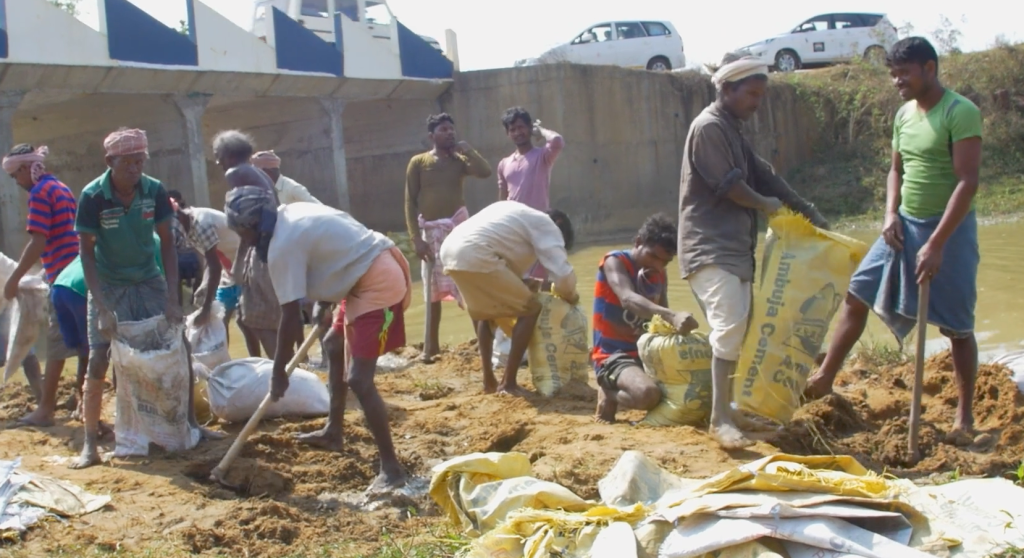
Goonj achieved this by collaborating with local farmers who knew what was needed but did not have the resources to do the work. People were too busy working their farms to band together to build a dam which would entail lost earning opportunities. Goonj’s solution was to offer discarded clothing gathered from urban centres as a form of payment to help them cover the costs. This is Goonj’s flagship ‘Cloth for Work’ program which helps build bridges, dig wells, repair roads, clean up water supplies, and many other sustainable community projects across India.
Goonj’s founder Anshu Gupta is quick to emphasise that projects like this not only make economic sense from a sustainability perspective, but they also preserve the dignity of people who may otherwise feel humiliated or disempowered by acts of charity. He explains: “The whole idea is that the people decide. The people take ownership…And it dignifies the entire act of giving. They can say ‘I’ve earned it’ and that entire language changes and there’s a lot of self-respect and a lot of dignity.”
Meanwhile Nsimire Aston is on the road to expansion and even with a young toddler and another baby on the way, he’s working with his wife and team in Kampala to open new distribution offices across Uganda.
“It’s wonderful. It’s truly, truly extraordinary,” says Braithwaite of the new breed of social entrepreneurs. “Wouldn’t it be great if the current aid system was changed and international policy was to encourage lots of Astons?”